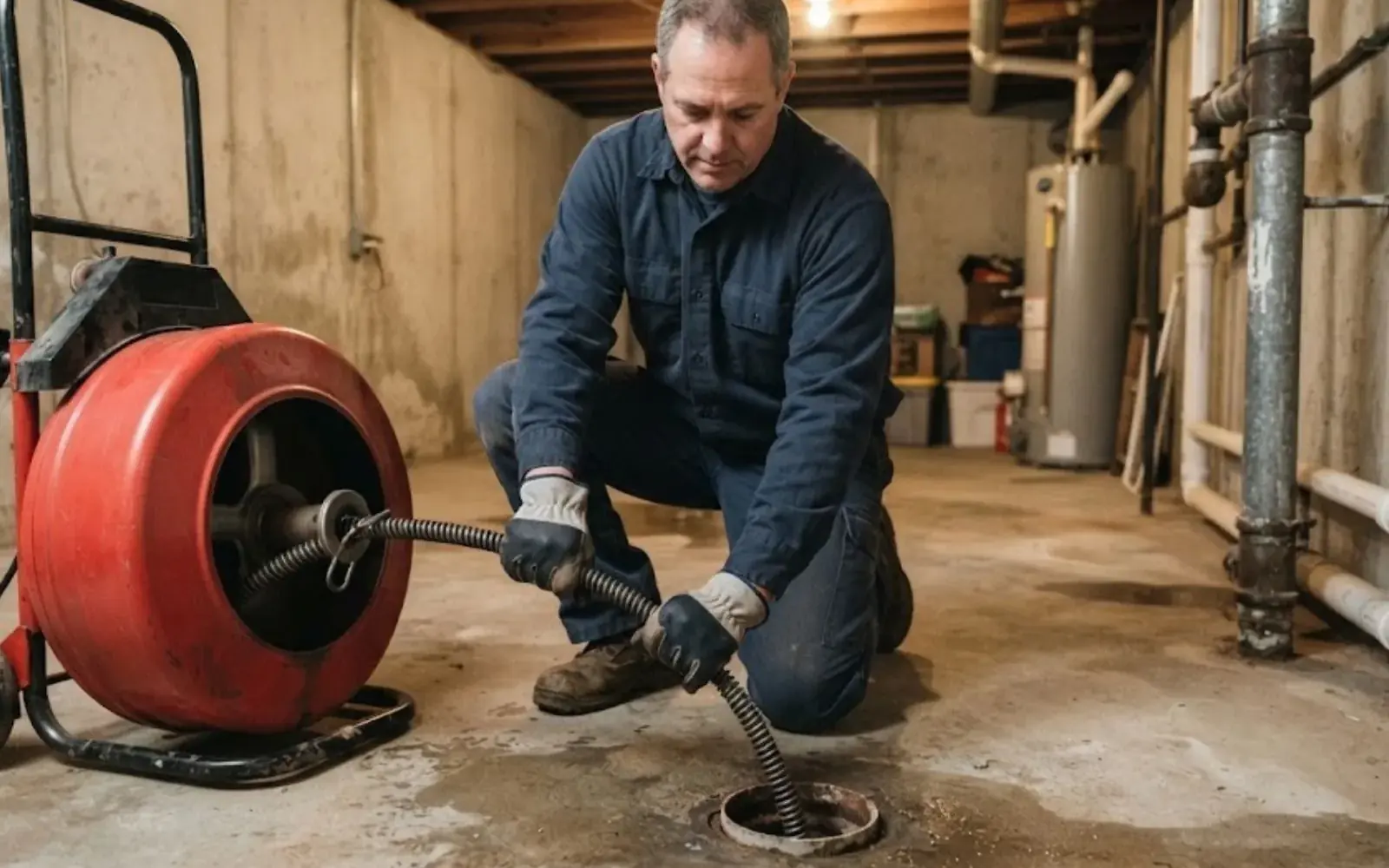
When a clogged drain is an emergency
A slow bathroom sink can wait until morning. Water rising in a tub when the toilet flushes, a floor drain that bubbles, or sewage smell near the lowest drain in the house cannot. Our emergency plumbers take these calls 24/7, including nights, weekends and holidays, and we can usually offer a same-day visit when you call.
While you wait, stop running water in the house, skip the dishwasher and washing machine, and hold off on flushing if more than one fixture is affected. Move rugs and boxes away from the floor drain. Please do not pour chemical drain cleaner into a standing backup, because it can splash on the plumber who has to work in that water.
Water coming up a drain?
Call now and a plumber will ask a few quick questions about which fixtures are affected.
How we clear a clog, from simple to serious
Most household clogs sit in the branch line behind a single fixture, and a cable machine handles them. We feed a cable through the trap or a cleanout, break through the blockage, and pull the debris back. Kitchen lines usually carry grease and food scrap. Bathroom lines carry hair and soap film. Laundry lines carry lint.
When a cable only punches a hole through the blockage, the clog tends to return within weeks. That is the point to consider hydro jetting, which scours the pipe wall with high-pressure water. If a line has clogged more than once, a sewer camera inspection shows whether a belly, a crack or tree roots are the real cause.
| What you notice | Likely cause | Usual first step |
|---|---|---|
| One sink or tub drains slowly | Hair, soap film or grease in the branch line | Cable the fixture trap and branch line |
| Kitchen sink backs up, dishwasher fills it | Grease and food scrap past the disposal | Cable, then jet if grease is heavy |
| Several fixtures gurgle at once | Partial blockage in the main drain | Cable the main from the cleanout |
| Basement floor drain bubbles or fills | Main line blockage or a surcharged sewer | Check cleanout, then cable or call for camera |
| Same drain clogs every few weeks | Root growth, a belly or a cracked joint | Camera inspection before more cabling |
Signs the problem is the main line, not one drain
Lowest drain goes first
Water shows up in the basement floor drain or shower before anything else. That points to the main line, because the lowest opening is where the water finds the surface.
Toilets and tubs react to each other
Running the washer makes the toilet gurgle or the tub rise. Fixtures sharing one line are fighting for the same blocked section.
Backup after rain only
A line that drains fine in dry weather and backs up in storms may be overloaded downstream. We will check your side first and tell you plainly if it is not your pipe.
Smell without a visible clog
A dry trap, a failed vent or a cracked line can all smell like sewage. A short inspection sorts out which one it is before anyone cuts a hole.
Drain backups in Calumet City after heavy rain
The city of Calumet City reports that the Little Calumet River levee was built after the floods of 1981 and 1982, and local news coverage of the July 2023 flooding said officials blamed much of the damage on sewer backups rather than river overflow. If your basement drain backs up only during a storm, the cause may be outside your house, and no amount of cabling will change that.
The city's flood prevention page suggests floor drain plugs, standpipes, overhead sewers and sewer backup valves for homes that see repeat backups. Our plumbers can tell you whether the blockage is on your side of the property line and, if it is, clear it. If your line is open and the city sewer is surcharging, we will say so and talk through backflow options.
Snaking and cabling: when a cable is the right tool
A drain cable is a coiled steel line that turns as it goes in. It breaks through a plug of hair, grease or paper and pulls some of it out. For a single sink, tub or toilet line, it is often all that is needed, and it costs less than jetting.
A cable has limits. It can punch a hole through a thick blockage and leave the walls of the pipe coated, so the clog returns. If the same drain stops again within weeks, ask for a camera look or a jetting quote instead of a third cabling.
Kitchen sink clogs
Kitchen drains clog differently from bathroom drains. Grease cools and sticks to the pipe wall, food scraps pile up in the trap, and a disposal can push waste further down the line. A slow sink that gurgles when the dishwasher runs is a warning sign.
Run hot water and dish soap first and clear the trap under the sink if you are comfortable doing it. Skip chemical cleaners in a sink that holds water. If the standing water does not move, or the other kitchen drain backs up too, call before it overflows.
What affects the cost of drain cleaning
Pricing depends on the line, not a flat menu
We quote after we know which line is blocked and how we reach it, and you hear the number before any work starts. These are the factors that move it most.
Does insurance cover a drain backup?
Many homeowner policies exclude sewer or drain backup unless you add a rider, and the city's own flood page notes that these riders cost extra. Read your declarations page or ask your agent before a storm, not after.
Want your real number? Call (773) 207-0518 and describe the drain.
Cleaning a drain does not change the piping, but any pipe, trap or cleanout we replace while we are there falls under the Illinois Plumbing Code. We tell you which parts we replaced so you know what changed.
Clogged drain questions from Calumet City homes
Yes. Our dispatch line is open 24 hours a day, every day, and we send a plumber the same day when one is available. Call and tell us which fixtures are backing up so the plumber arrives with the right cable or jetting equipment.
We recommend against it. Caustic cleaners rarely clear a full blockage, and standing chemical water is dangerous for the person who has to work in it. A plunger or a hand auger is fine for one slow fixture.
A drain that clogs repeatedly usually has something the cable cannot remove, such as grease coating the wall, root growth at a joint or a sagging section that holds water. A camera inspection finds it so you stop paying for the same visit.
Yes. Floor drains connect straight to the main line, so we clear the drain and then check the main with a cable or camera to be sure the blockage is gone and not just moved.
Open the main cleanout if you can reach it. If it is dry while the floor drain fills, the blockage is probably between the cleanout and the street. If the cleanout is full, the blockage is likely downstream. We will confirm either way, and a high water line after a storm points to the street.
We take commercial drain calls too, including restaurant kitchen lines and restroom stacks. See our commercial plumbing page for after-hours details.
Know which fixtures are affected, whether it started suddenly or got worse over days, and where your main cleanout is. A photo of the cleanout cap helps. Our related page on sewer line cleaning explains the main line side in more detail.