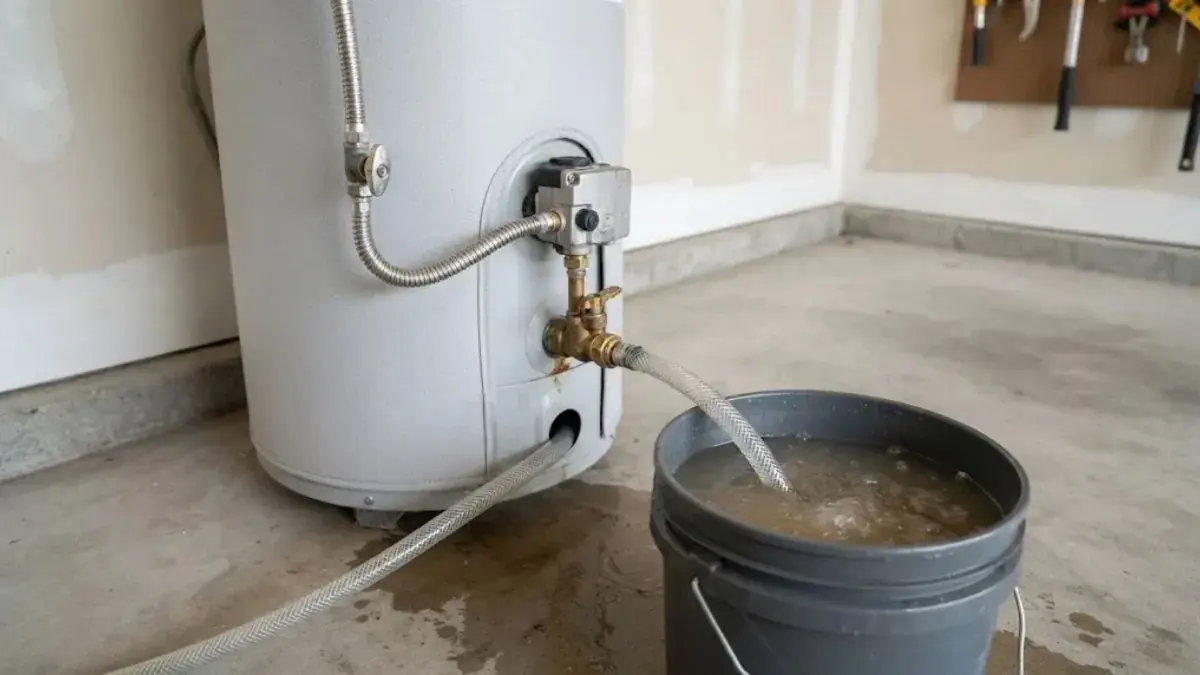
Three valves, three jobs
A tank water heater has a shutoff valve on the cold supply, a drain valve near the bottom and a temperature and pressure relief valve near the top or side. They look similar but do very different things, and the relief valve in particular must not be capped, plugged or removed.
If water is dripping, find out which valve it is first. A weeping drain valve or shutoff is a simple repair. A dripping relief valve may be telling you something about pressure or temperature. For help, see our water heater repair page.
| Valve | Where it is | What it does | If it leaks |
|---|---|---|---|
| Cold shutoff | On the cold pipe above the heater | Stops water to the tank | Tighten the packing nut, or replace the valve |
| Drain valve | Near the bottom of the tank | Lets you drain the tank | Close firmly, replace if it still drips |
| Temperature and pressure relief | Near the top, with a pipe to the floor | Opens to release excess pressure or heat | Find out why, then replace |
| Gas control | On gas heaters, at the burner | Controls gas flow and the pilot | Call a plumber |
Why a relief valve drips
Thermal expansion
Heated water expands. In a closed system, pressure rises and the valve may release a little water on each heating cycle. An expansion tank usually fixes this.
High supply pressure
If the street pressure is high, a pressure reducing valve and an expansion tank protect the system.
A worn valve
Mineral buildup or age can keep the valve from seating even when pressure is normal.
Overheating
A failed thermostat can push the tank past its safe temperature. That is a safety issue and needs a plumber.
Never plug the relief valve. If it keeps dripping, have a plumber look at it. Replacement is quick, but the cause should be found.
Valve leaking?
Call and describe which valve and how fast it drips.
Replacing a drain or shutoff valve
Shut off power or gas
Turn off the breaker or set the gas control to pilot or off.
Close the cold supply
Close the shutoff above the heater and open a hot faucet to relieve pressure.
Drain part of the tank
Drain until water is below the valve you are replacing.
Swap and test
Remove the old valve, wrap threads with sealant, install the new one, refill the tank and check for leaks.
Always refill the tank fully before turning power or gas back on. An electric element that fires in an empty tank burns out within seconds. If the valve is corroded to the tank, do not force it. Call a plumber.
Calumet City local note: licensing and where the work is allowed
The Illinois Department of Public Health says that individuals who install, alter, repair and maintain plumbing in Illinois must be licensed under the Illinois Plumbing License Law. It also links to the Illinois Plumbing Code in Title 77 of the Illinois Administrative Code as the minimum standard.
That includes water heater work in many cases, and local rules on permits vary. Ask the Calumet City Building and Zoning Department what applies, and ask your own village if you live nearby. If your heater sits in a basement that has flooded, the city's flood prevention page suggests marking the breaker box so power can be cut quickly, which also helps when you work on a heater.
Cost factors
A valve itself is inexpensive. The cost of a plumber's visit depends on access, whether the tank must be drained, whether a code item like an expansion tank or a discharge pipe is missing and the hour. An older heater with several leaking parts may be better replaced. See our water heater replacement page.
Before you start: shut down the heater
Turn off the gas or the power to the heater first, and close the cold water supply valve. Open a hot tap somewhere in the house so the tank does not hold a vacuum. Let the water cool before touching any valve, because the water in the tank can scald.
If the shutoff valve will not close, stop. Forcing a seized valve can break the pipe behind it. Call a plumber, and if water is running, shut off the main.
When to leave it to a plumber
A drain valve swap is simple on a cool, drained tank. A relief valve is a safety part, so it should be matched to the heater and piped to a safe drain, and the work falls under plumbing rules. If the heater is old, the corroded fittings may break as you loosen them, and a call is cheaper than a flooded utility room.
Whether the heater is in Calumet City or in Lansing, the valves work the same way, and our service areas page shows where a plumber can come if you would rather not do it yourself.
Questions about water heater valves in Calumet City
Illinois requires plumbing work to be done by licensed plumbers, and permit rules vary by municipality. Ask the Calumet City Building and Zoning Department what applies to a homeowner's own repair.
That pattern usually points to thermal expansion. An expansion tank often solves it.
No. The relief valve must be free to discharge, and capping it is a safety hazard.
Usually under an hour if the valve is accessible and the tank is easy to drain.