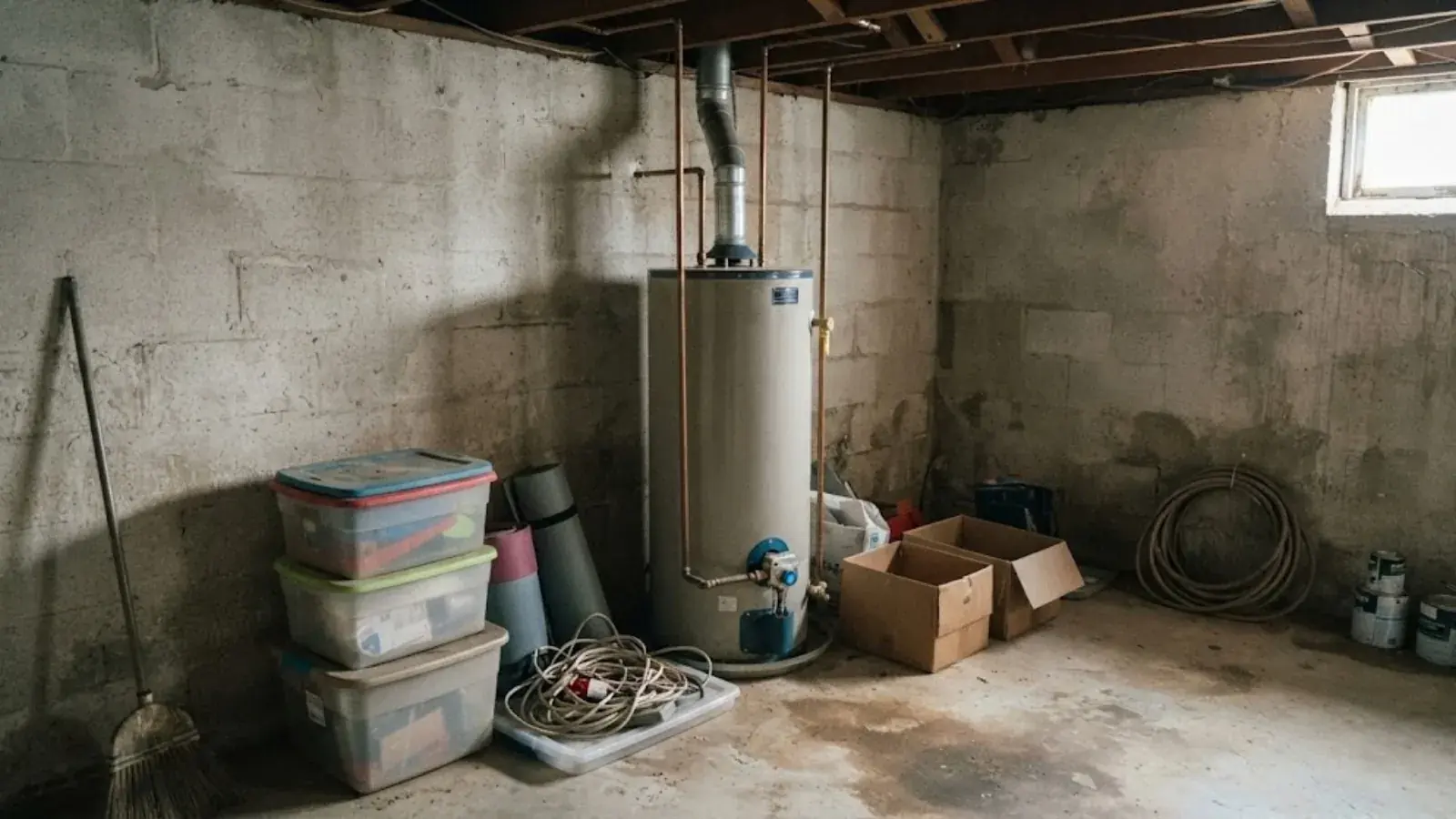
The short answer: when to replace and what to expect
Replace a hot water heater when the tank itself leaks, when the unit is roughly ten to twelve years old and starting to fail, or when repairs keep stacking up. A standard tank swap usually takes a few hours, includes removing the old unit and ends with a test of the new heater, the vent and the relief valve.
If you would rather talk to someone than read, our emergency line is open 24/7 and a plumber can tell you what to expect for your heater. This guide covers the decision in more detail. When you are ready to book, see our water heater replacement page.
Warning signs that a tank is near the end
Moisture around the base
A drip from a fitting is fixable. Water seeping from the bottom seam means the steel has corroded through.
Rust in hot water only
If cold water runs clear and hot water has a rusty tint, the tank interior may be corroding.
Popping and rumbling
Sediment at the bottom traps steam. A flush can help, but years of buildup can also mean a tired tank.
Hot water runs out fast
A failed dip tube or heavy sediment shrinks the usable volume of a tank.
Check the data plate on the side of the heater. It lists a serial number that often encodes the manufacture date, and the manufacturer's website can decode it. Age alone does not condemn a heater, but a tank past a decade with a symptom is a strong candidate.
Not sure if yours is done?
Call and describe the symptoms and the age printed on the data plate.
Choosing the replacement: four decisions
| Decision | What to think about | Common answer |
|---|---|---|
| Fuel | Gas line available? Electric circuit capacity? | Keep the fuel you have unless you are renovating |
| Size | People in the house, bathrooms, peak use | 40 to 50 gallons for many households |
| Type | Tank, tankless or heat pump hybrid | Tank is the simplest swap |
| Efficiency | Upfront cost versus running cost | Look at the yellow energy guide label |
Matching the new heater to the old one makes the job simpler, because the gas line, vent and water connections already fit. Changing fuel or type is possible but adds work. A planned water heater installation gives you time to compare, while an emergency swap usually means picking from what a plumber can bring that day.
What the replacement visit looks like
Shut off and drain
The plumber closes the water and gas or power, then drains the old tank to a floor drain or outside.
Remove the old unit
Fittings come off, the old tank goes out and the area is cleared.
Set and connect
The new heater goes on a pan or stand, water lines and gas or electric connect and the vent is checked.
Add the safety parts
A new relief valve with a discharge pipe, a drain valve and an expansion tank where the system needs one.
Before the plumber leaves, you should see the heater run through a heating cycle, check for leaks at every connection and learn where the shutoffs are. Ask for the model and serial number on paper, because that is what you need if a warranty claim comes up.
Calumet City local note: basements, floods and where the heater sits
Calumet City's flood prevention page recommends protecting basements with floor drain plugs, standpipes, overhead sewers or sewer backup valves, and suggests marking the breaker box so basement power can be shut off quickly. If your heater is in a basement that has taken on water, tell the plumber, because a unit sitting a few inches higher on a stand is less likely to be damaged the next time.
News coverage of the July 2023 flooding reported one resident losing a water tank and heating equipment in a basement flood, along with thousands of dollars in repairs. The practical lesson is to think about where the new heater sits and what protects it, not only which model to buy.
What affects the cost of a replacement
Price depends on the heater type and size, the venting and gas work the house needs, whether code items like an expansion tank are added, how hard the old unit is to reach and what hour you call. A written price before work starts is standard, and after-hours visits cost more than a scheduled day. Rebates for efficient models change often, so check with your utility before you buy.
We replace heaters across Calumet City and in Lansing, and our service areas page lists the other south suburbs where you can call us for a same-day visit.
Questions about replacing a water heater in Calumet City
It can. If water has reached the burner or controls before, ask the plumber about raising the heater on a stand, keeping the drain pan clear and routing the relief discharge where water cannot flow back in. The city's flood page also suggests marking the breaker so you can cut power quickly.
A standard like-for-like tank swap generally takes several hours. Changing fuel, relocating the unit or adding venting takes longer.
Some homeowners do the water connections, but gas, venting and electrical work carry real risk, and Illinois requires plumbing work to be done by licensed plumbers. Check with the Calumet City Building and Zoning Department about what applies to you.
A light annual drain of a few gallons removes sediment and is a good habit. Check your manual for the interval.