Start with what is in your water
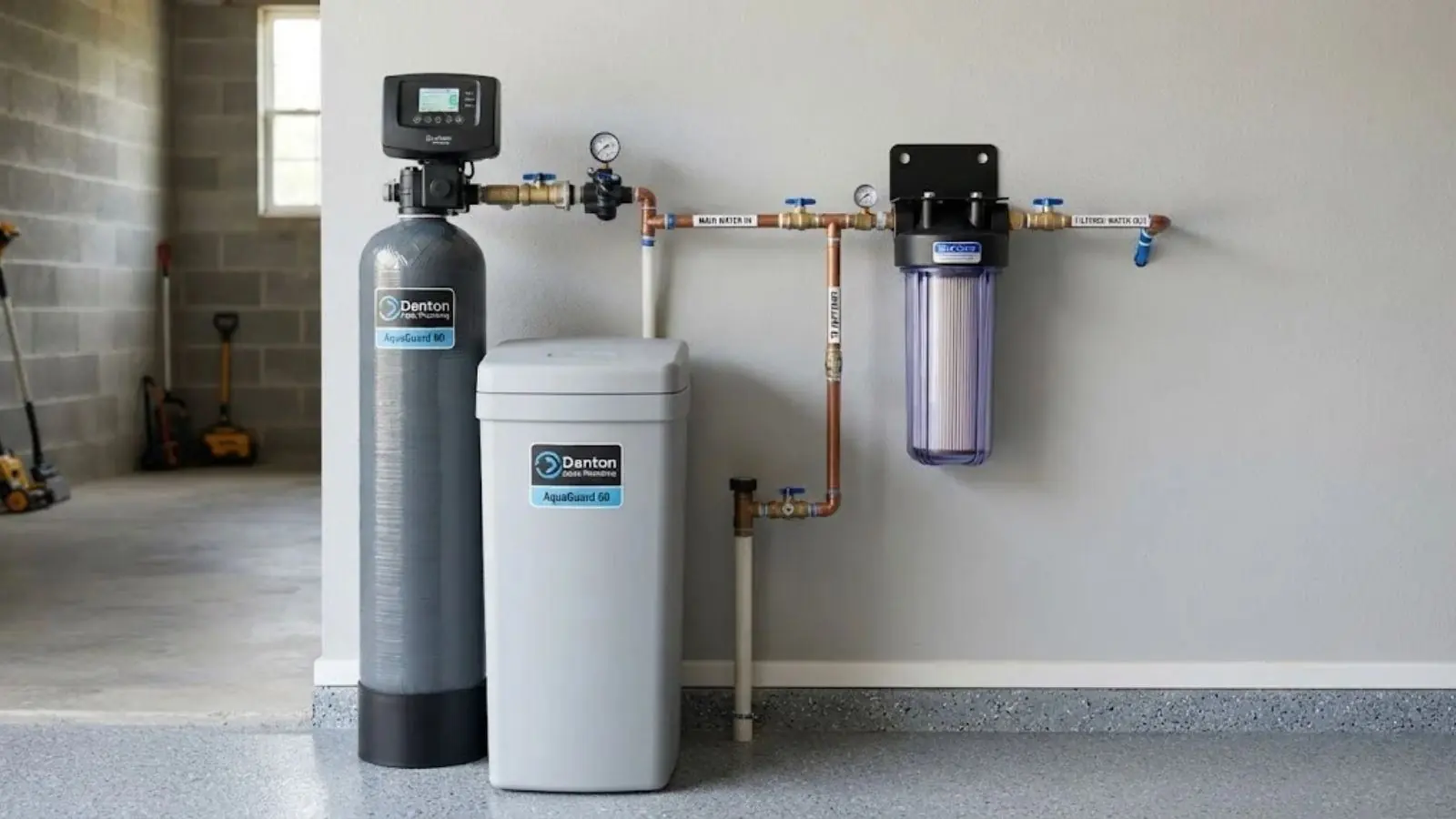
A water softener, a carbon filter and a reverse osmosis system do different things. A softener swaps calcium and magnesium for sodium or potassium and prevents scale. A carbon filter reduces chlorine taste and odor. Reverse osmosis reduces a wider range of dissolved substances. The right choice depends on what you want to remove.
That is why we start with a test. A hardness strip costs a few dollars. A lab test for lead or other contaminants costs more and tells you more. We do not recommend a system until we know what problem it is meant to solve.
What Calumet City's water report says
The Calumet City Water Department's 2024 report says the city draws 100 percent of its drinking water from Lake Michigan, with 20 percent supplied by Chicago and 80 percent by Hammond. It says the water met all U.S. EPA and state drinking water standards, and it notes fluoride is added and that sodium has no state or federal limit.
The report also lists a lead 90th percentile of 17 parts per billion against a 15 ppb action level. It says lead comes primarily from service lines and home plumbing. It advises flushing taps and using a filter certified by an accredited body if you are concerned. The report we reviewed does not list a hardness figure, so we do not quote one. Test your tap, or ask the city water department.
Want your water tested?
Call and a plumber will explain your options.
Softener, filter or both?
| Concern | Tool | Note |
|---|---|---|
| Scale on fixtures, spots on dishes | Water softener | Reduces hardness |
| Chlorine taste and odor | Activated carbon filter | Improves taste |
| Lead in tap water | NSF-certified lead filter or RO | Look for certification, replace cartridges on schedule |
| Sediment or cloudiness | Sediment filter | Protects fixtures and appliances |
| Drinking water quality | Reverse osmosis at the kitchen sink | Under-sink point-of-use |
| Appliance protection | Softener or scale inhibitor | Helps water heaters last |
A certified filter is not a replacement for fixing a lead service line or lead plumbing. If your home may have lead pipes, see our water service line and repiping pages. For tankless units that suffer from scale, see our tankless water heater page.
How we install a system
Test and size
We look at your water test, household size and space.
Install
We add a bypass valve, drain connection and any pressure gauge or electrical outlet.
Program and flush
We program the softener, set regeneration and flush the lines.
Show you service
We show you how to add salt, replace filters and bypass the system.
Hardness: test, do not guess
Because the city report we reviewed does not publish hardness, we recommend a test strip or a call to the Calumet City Water Department at the number on its report. Hardness can vary with the supplier, and the city's water comes from both Hammond and Chicago.
If your test shows low hardness, a softener may be unnecessary. If it shows high hardness, a softener protects your water heater and fixtures. Either way, the sodium in a softener is a consideration for people on a sodium-restricted diet, and the city's report says to consult a physician.
What affects the cost of a water treatment system
Treatment cost factors
We quote after the test. These factors drive the price.
A note on claims
We do not promise that a system will remove every contaminant. We recommend systems based on test results and tell you what each can and cannot do.
Want your real number? Call (773) 207-0518 and tell us your goals.
Water treatment questions
The city's 2024 report that we reviewed does not list a hardness figure. A test strip or a call to the water department will tell you.
Only if your water is hard enough to cause scale. Test first.
A filter certified for lead reduction can help. Look for the certification, and replace cartridges on schedule.
Yes, and it often protects the heat exchanger. We can talk through placement.
Yes, through our emergency lines, such as water heater repair and burst pipe repair.