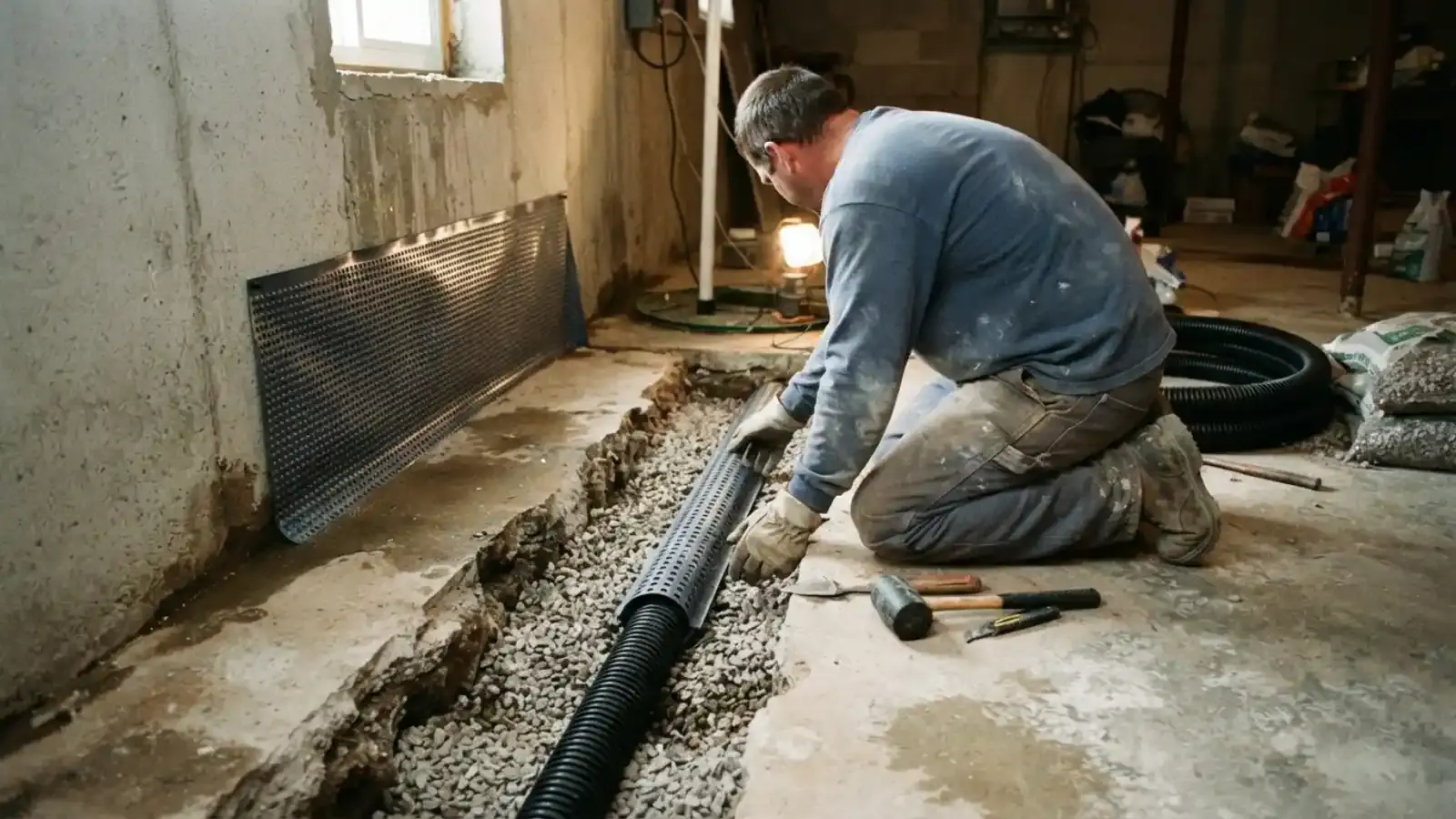
What interior waterproofing does
Interior waterproofing does not stop water from reaching your foundation. It collects water that gets into the basement and moves it out through a sump pump. A perimeter drain runs along the footing, sits in gravel and slopes toward a sump pit, and the pump sends the water outdoors.
That approach is common because it can be done from the inside, without digging up the yard. It works for groundwater and wall seepage. It does not fix a sewer backup, and it does not stop a burst pipe. If you are not sure what is wetting your floor, see our basement waterproofing page or call and describe the water.
Find the source before you buy a system
| What you see | Likely source | Interior drainage helps? |
|---|---|---|
| Damp wall after rain, clear water | Groundwater or surface runoff | Yes |
| Water at the wall-floor joint | Hydrostatic pressure | Yes |
| Gray, smelly water at the floor drain | Sewer backup | No, needs backflow protection |
| Water with no rain | A leaking pipe | No, fix the pipe |
| Single crack leaking | Crack in the wall or floor | Sometimes, a crack repair may be enough |
A plumber can sort this out in a visit. If a pipe is leaking, our leak detection team can find it. If the water smells, say so when you call.
Water in the basement?
Call and describe what the water looks like and when it appears.
The parts of an interior system
Perimeter drain
A perforated pipe set in gravel along the inside of the footing that collects water.
Sump pit and pump
The pit gathers water and the pump sends it outside. This is the heart of the system.
Wall membrane
A sheet that directs seepage down to the drain instead of onto the floor.
Battery backup
Keeps the pump running when the power goes out, which is common in storms.
Discharge line
A pipe that carries water out of the house and away from the foundation.
A system is only as good as the pump. A pump that fails in a storm leaves you with a pit of water and a flooded floor. Our sump pump page explains how to choose, maintain and back up one.
What a plumber looks at first
A site visit usually covers
- Where and when water enters, and whether it is clear or gray
- The condition of the floor drain, cleanout and any existing sump
- Where the discharge goes and whether it can freeze
- Whether the power supply and a backup are in place
- Whether a backwater valve is a better answer than drains
Calumet City local note: river, levee and sewer
The city of Calumet City's flood prevention page lists the November 1990 flood as the highest recorded on the Little Calumet River and says a levee was built after the 1981 and 1982 floods. It lists floor drain plugs, standpipes, overhead sewers and sewer backup valves as measures for homes that see backups.
Local news coverage of the July 2023 flooding reported that officials said much of the damage came from sewer backups. The state declared the city a disaster area, and residents could apply for city aid covering about half the cost of home sewer improvements. Programs change, so ask the city what is open today before you spend money.
What affects the cost
The length of wall, the condition of the floor, the pump and backup you choose and any finished walls all matter. Cutting and replacing concrete is a large part of an interior drain. A sewer backup valve costs less than a full interior system but solves a different problem. Ask for a written scope.
Signs your basement needs more than a sealer
A damp patch that dries out in a day or two is a different problem from water that seeps along the floor edge after every rain. Efflorescence, the white powder on block walls, tells you moisture is moving through the wall but not how much. Standing water, a musty smell that returns and peeling paint are signs the issue is ongoing.
If water enters at the floor joint or through the wall after heavy rain, paint or sealer on its own will not hold. It needs a way to collect the water and send it to a pump.
Questions to ask before you hire
Ask what the system does with the water, where it goes and what happens if the power fails. Ask for the pump, the drain and the discharge in writing, and ask who is licensed to do the plumbing part of the job. A contractor who only talks about wall coatings has not answered the question of where the water goes.
The Little Calumet River levee protects Calumet City and Lansing together, so many neighbors share the same basement worries. See our service areas page for how we cover both.
Sealers and paints follow the manufacturer's directions. A new drain line or sump discharge is plumbing work covered by the Illinois Plumbing Code, so ask who is licensed to do it.
Questions about interior waterproofing in Calumet City
It helps with groundwater, but a major flood or a sewer backup can overwhelm it. The city's flood page notes that sump pump and sewer backup coverage are insurance riders that cost extra, so consider coverage and a backup power source.
Interior drainage does not require excavation. Exterior waterproofing does, and is a larger project.
Many interior systems take a few days, depending on length and the floor.
A dry basement is easier to finish and sell, but we do not quote resale figures.