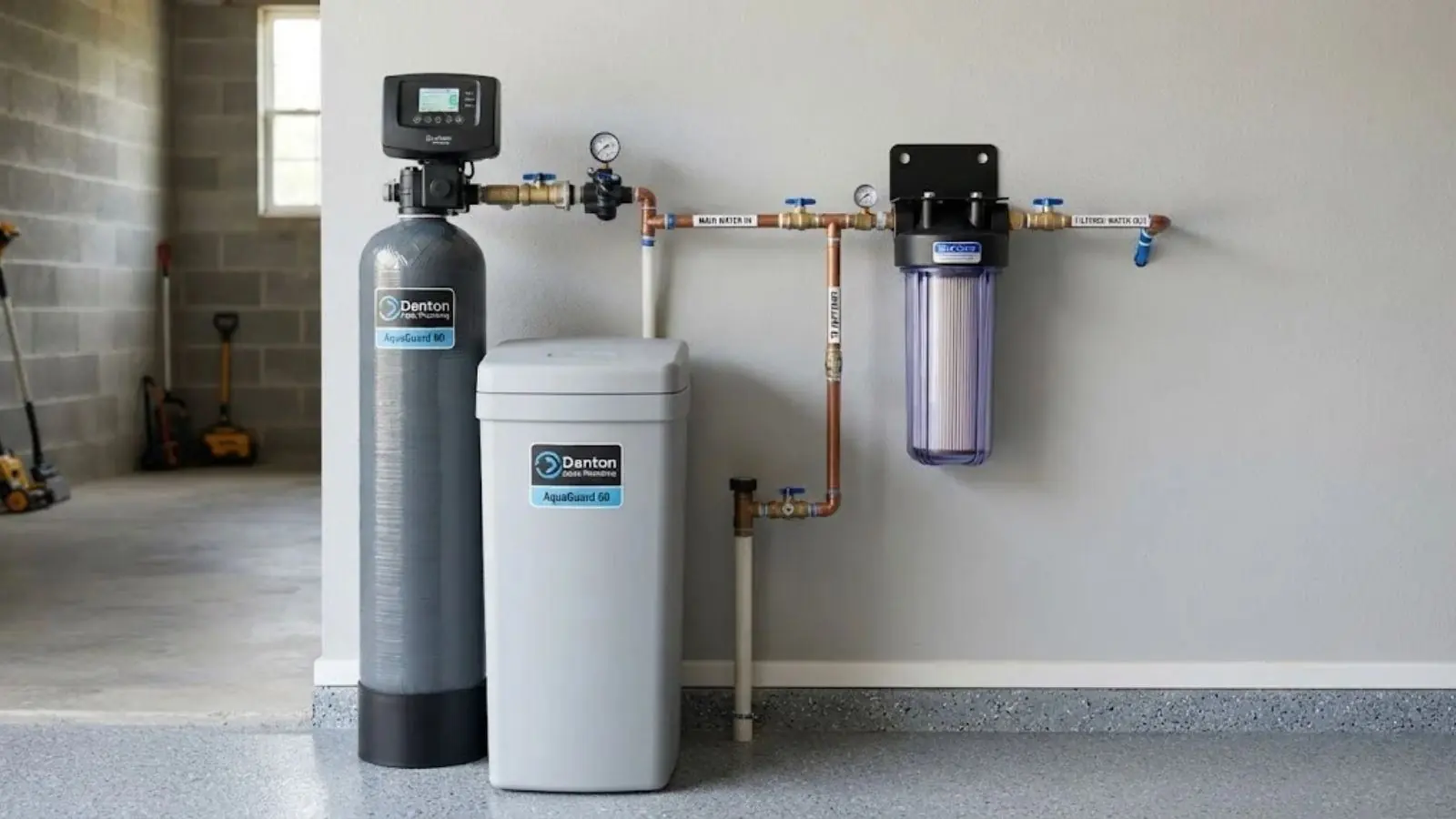
The basic idea behind a filter
A water filter forces water through a material that traps or chemically binds unwanted substances. Different materials catch different things. A sediment filter catches particles. Activated carbon catches chlorine and some organic compounds. Reverse osmosis pushes water through a membrane that blocks many dissolved substances.
No single filter removes everything. The right choice depends on what is in your water and what you want to fix. We start with a test, and our water softener and filtration page explains how we recommend systems.
| Type | How it works | Good for | Limits |
|---|---|---|---|
| Sediment | Mechanical screen | Grit, rust flakes, cloudy water | Does not remove dissolved substances |
| Activated carbon | Adsorbs chemicals onto carbon | Chlorine taste and odor | Needs replacement on schedule |
| Reverse osmosis | Membrane blocks dissolved substances | Drinking water at one tap | Slow, wastes some water |
| Water softener | Ion exchange swaps hardness minerals | Scale on fixtures and heaters | Adds sodium or potassium, not a drinking filter |
| Certified lead filter | Media tested to reduce lead | Lead concerns at a tap | Only works if certified and maintained |
What a softener does and does not do
A softener is not a filter in the usual sense. It exchanges hardness minerals for sodium or potassium so scale does not build up in pipes and heaters. It does not remove chlorine, lead or most contaminants. A person on a sodium-restricted diet should ask a doctor about the sodium added by a softener.
Want help choosing?
Call and a plumber will explain what each system can and cannot do.
Where filters go
Point of use
An under-sink or faucet filter treats drinking and cooking water at one tap.
Whole house
A system on the main line treats all the water in the house, often a sediment filter plus carbon.
At the water heater
A softener or scale filter protects the heater and the pipes after it.
Refrigerator and ice maker
A small inline filter often at the supply valve.
Filter media wear out. A carbon filter that is overdue can release what it trapped and grow bacteria. Mark replacement dates on a calendar and keep spare cartridges.
Calumet City local note: what the 2024 report lists
The Calumet City Water Department's 2024 report says the city draws 100 percent of its drinking water from Lake Michigan, with 20 percent supplied by Chicago and 80 percent by Hammond, and that the water met all federal and state standards. It notes that mandatory treatment includes coagulation, sedimentation, filtration and disinfection, and that fluoride is added.
The report also lists results from monitoring for 29 PFAS compounds and lithium under the federal UCMR5 program, and shows two PFAS compounds detected at an entry point in September 2024 at about three parts per trillion. No health-based standards had been set for them under the Safe Drinking Water Act.
The report lists a lead 90th percentile of 17 parts per billion against a 15 ppb action level. We cannot interpret health effects. Ask your doctor and the city water department, and choose a filter certified for the contaminant you care about.
What to do before you buy a system
A short checklist
- Read the latest city water quality report and write down the contaminant you actually care about
- Look for a filter certified by an accredited body for that specific contaminant
- Ask for the replacement cartridge price and schedule before you buy
- Do not use a filter on water that is unsafe to drink unless the label says it is meant for that
- Call your doctor, not a plumber, about any health question
How to choose without guessing
Read the city report
It lists what was found at the entry points and what the city monitors.
Test your tap
A test strip shows hardness and chlorine. A lab test checks lead, which depends on your own plumbing.
Match the tool to the problem
Scale needs a softener. Taste needs carbon. Lead needs a certified filter and often pipe replacement.
Maintain it
Replace cartridges and service the unit on the schedule in the manual.
If your house has lead service line concerns, a filter is a stopgap and not a repair. Our repiping page explains pipe replacement.
Water for Calumet City and for Lansing comes from the same Lake Michigan supply through Hammond, so the testing advice here applies in both. Our service areas page covers where we install systems.
Questions about water filtration in Calumet City
The city's 2024 report says the water met federal and state standards. Whether you want a filter is your choice, and it depends on taste, your plumbing and your health concerns. A certified filter can help if you are concerned about lead from household plumbing, as the report notes.
It means a product was tested to reduce specific contaminants. Look at the contaminants listed on the certification, not just the logo.
Follow the manufacturer's schedule. It varies by filter and by water.
Some do, such as reverse osmosis, and most carbon filters do not. Ask your dentist or doctor if that matters to you.